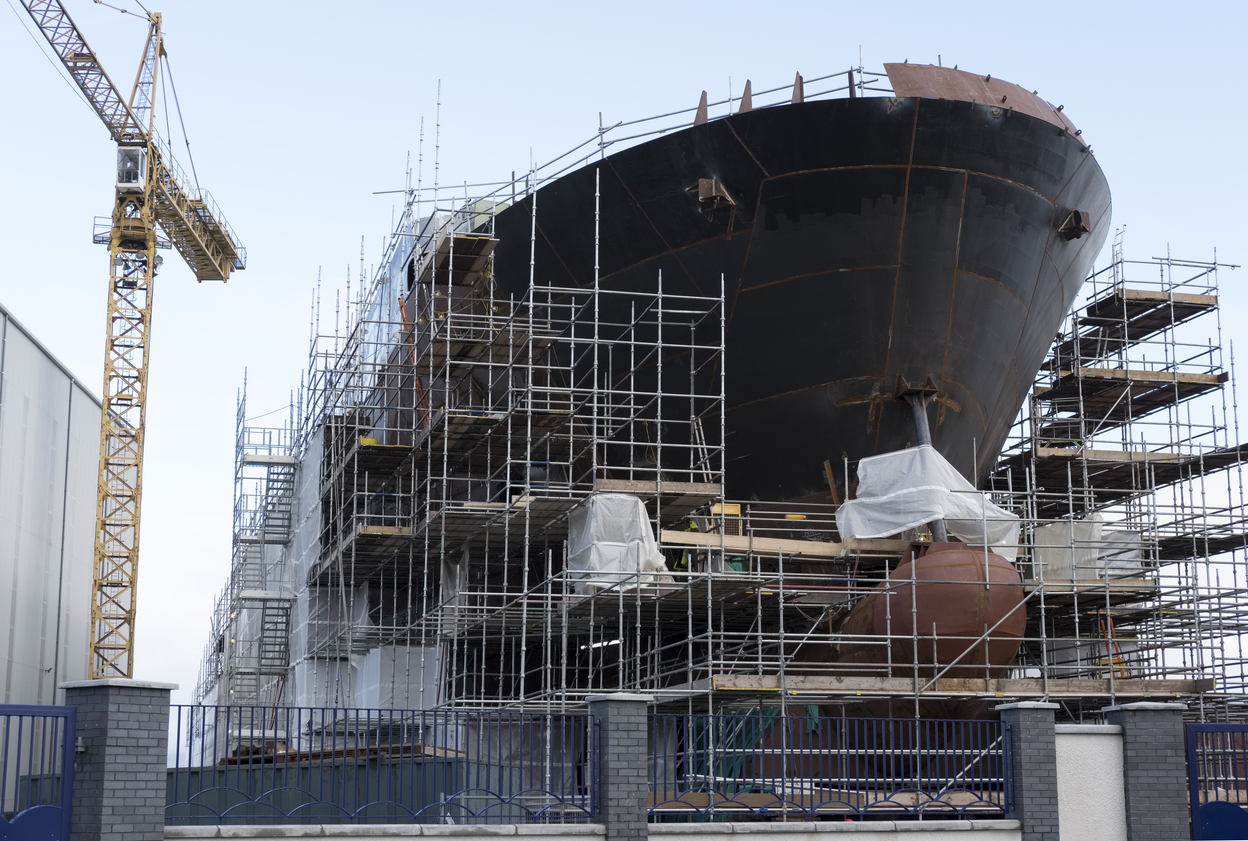
An engineer for shipbuilding and marine technology is no ordinary profession. It requires numerical thinking, spatial imagination, in-depth technical understanding, creativity and a high degree of stamina. What these engineers plan and coordinate must be executed precisely by qualified craftsmen. And this is precisely where there is the greatest shortage in German shipyards - at the execution level. We provide Polish specialists to fill this gap.
What are the fundamental skills required of a naval architect and marine engineer?
A shipbuilding engineer must be able to calculate forces, load capacities and the stability of a ship, calculate the propulsion power and also keep an eye on the costs. Numerical thinking is therefore not just a nice extra qualification - it is the basis of the entire job.
Many of the calculations have practical implications, but are carried out in a completely theoretical environment. The ship is not first built, then measured and tested. It is calculated before it has a real shape. This requires a high level of spatial thinking: the engineer has to develop a mental concept from requirements in text form, calculate it and draw up construction plans on this basis - all without holding a model in their hands.
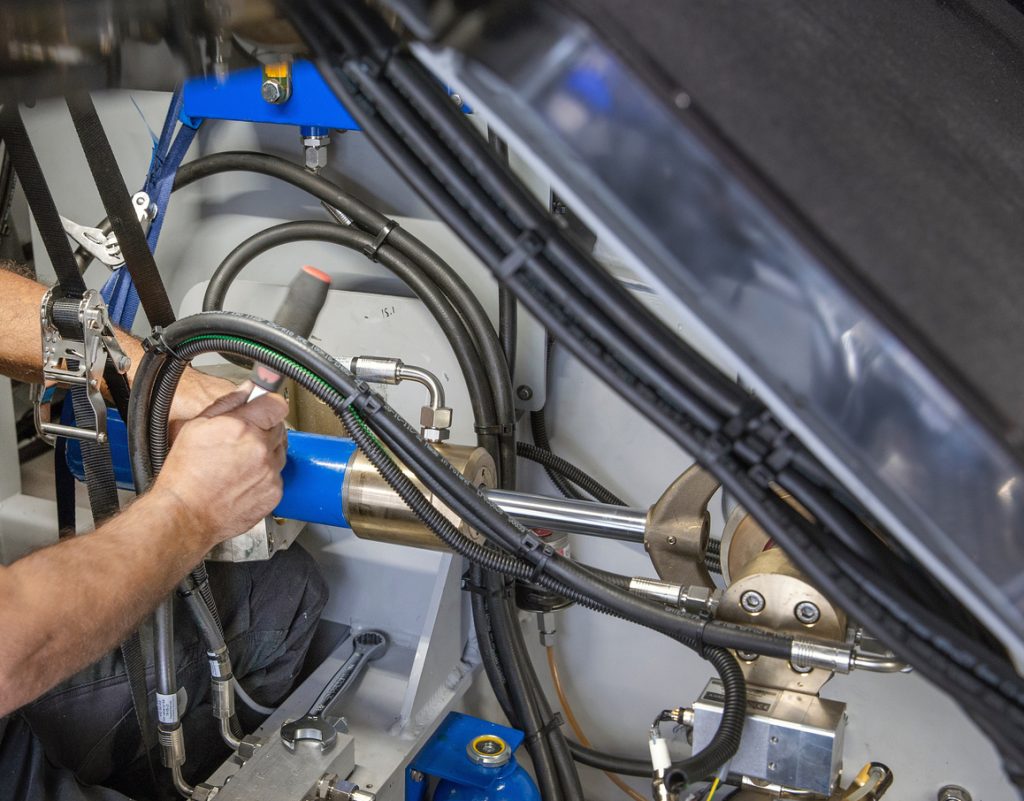
A shipbuilding engineer must fully understand how ships, their machines and systems work - only then can he select the right systems and integrate them into the planning.
A concrete example: research vessels or ships for offshore facilities often have to maintain their position to the metre. An anchor is not enough for this - it allows the ship to swing, and at great depths or pipelines on the seabed it is not an option anyway. The solution is the dynamic positioning system (DP system): GPS and sensors continuously record whether and how the ship is moving. The control system then steers the engines, propellers and thrusters so that the ship remains exactly in position. If you don't know this system, you can't deliver a useful solution in a project like this.
In addition to the planning work, a shipbuilding engineer must directly monitor the construction and assembly of the components - recognising potential faults before they have an impact and finding solutions immediately on site. In shipbuilding, work is often carried out around the clock: Engineers must either be present on site on a rotating basis or at least be available at all times to intervene in the event of problems.
Reliability, punctuality, critical faculties and the ability to work independently are also required. An engineer must plan their own work, manage themselves and at the same time coordinate manufacturing and production processes under their own direction.
Project negotiations can extend over long periods of time. Requirements change, clients request adjustments - sometimes even during the actual construction. Sometimes several alternative plans have to be drawn up, from which the client ultimately selects a single one. Even plans that are only used to attract customers and are never actually realised must be drawn up with the utmost care - because regulations on safety, accident prevention and classification always apply, regardless of whether the ship is ever built.
Patience and determination must therefore work together. Anyone who drops out after a few months of frustration is in the wrong place in shipbuilding.
Why choose unusual solutions for unusual requirements?
Creativity is not a luxury in shipbuilding - it is a core competence. Nobody orders a ship without a purpose. The entire design must be subordinated to this purpose, and this often requires unconventional approaches.
An example: A client wants a luxury superyacht with a fixed budget. The main purpose is luxury - combined with a host function: helicopter reception, tender, water toys. Accommodating all this in a single yacht means enormous construction effort and high costs - the landing deck, hangar and garage for the toys have to be built to the highest standard.
A creative alternative: a main yacht plus a shadow vessel - a yacht escort ship. Water toys can be carried there; the escort vessel can precede the yacht and put everything in the water before the guests arrive. Helicopter operations take place on the escort vessel, which makes the main yacht much quieter. In addition, the companion can act as a supply vessel, provide bunker capacity for fuel and storage space for food, accommodate guest cabins or be used as a second yacht. The overall result: more capabilities, more flexibility - and a price far below that of a mega yacht with all these functions. The savings are easily in the tens of millions.
Such solutions do not result from rigid planning routines, but from a genuine understanding of the task - combined with the willingness to take unusual paths.
Shipbuilding is constantly evolving. Engineers have to continuously train themselves with regard to new systems and learn how to use different software for design and planning. If you stand still, you lose touch - and with it your value to the shipyard.
What engineers plan - what Polish specialists realise
As demanding as the engineering work is, without experienced craftsmen and technicians, every plan remains just paper. And this is precisely where German shipyards are lacking the most - in execution. Polish specialists close this gap reliably, at short notice and with the right qualifications.
We provide all the skilled and technical personnel from Poland for all trades in shipbuilding:
- Skilled worker for surface treatment and coating - for corrosion protection and final treatment
- Welder (MAG, TIG, E-hand) - for joining fuselage segments, superstructures and components
- Shipbuilding construction mechanic - for the manufacture and assembly of ship structures
- Fitter and metalworker - for hull construction, module construction and fine assembly
- Pipe fitters - for pipes, pumps, valves and all system openings
- Industrial mechanic - for machine installation, maintenance and repair
- Ship mechanic - for propulsion systems and continuous monitoring
- Electricians and electrical engineers - for on-board installations, power supply, DP systems and control technology
Request shipbuilding specialists from Poland
Let us know what you need - we'll get back to you within 24 hours with suitable candidates.
FAQ: Polish skilled labour as execution level in shipbuilding
Can Polish craftsmen also be deployed for technically demanding systems such as DP systems or alternative drives?
At the installation level, yes - electricians, pipe fitters and industrial mechanics from Poland can professionally install and connect such systems. The system-specific instruction and commissioning is usually carried out by the responsible engineer or system manufacturer on site.
How does the co-operation between Polish craftsmen and engineers work?
Polish specialists work according to specifications and under the supervision of the project engineers. On request, we can also provide German-speaking foremen or team leaders from Poland to facilitate communication between the planning and execution levels.
For which contract models are Polish specialists available?
Temporary employment (AÜG) for flexible short-term requirements, contracts for work and labour for clearly defined trades and secondment for longer project assignments. We can advise you on which model is best suited to your project.
How quickly can skilled workers from Poland be ready for deployment?
For standard profiles within 7 days. For specialised qualifications or larger teams, we recommend 2-3 weeks lead time.
Can you also arrange teams for superyacht or offshore projects?
Yes, we provide specialists for all types of ships - from freighters and ferries to research vessels, yachts and offshore projects. We discuss the requirements with you individually.
What is included in your complete package?
Candidate selection and quality checks, transport, accommodation, catering, work permits, A1 certificates and all other formalities. You concentrate on your project - we take care of everything else.